Collections and Retention Trend Metric

Assuming that a contractor’s project team has done an effective job of aggressively billing the project, the biggest variable that remains for cash flow is the effectiveness of collections.

D. Brown Management Profile Picture
Share

A good way to look at this is in your aging buckets as a percentage of the total outstanding, excluding retention.  
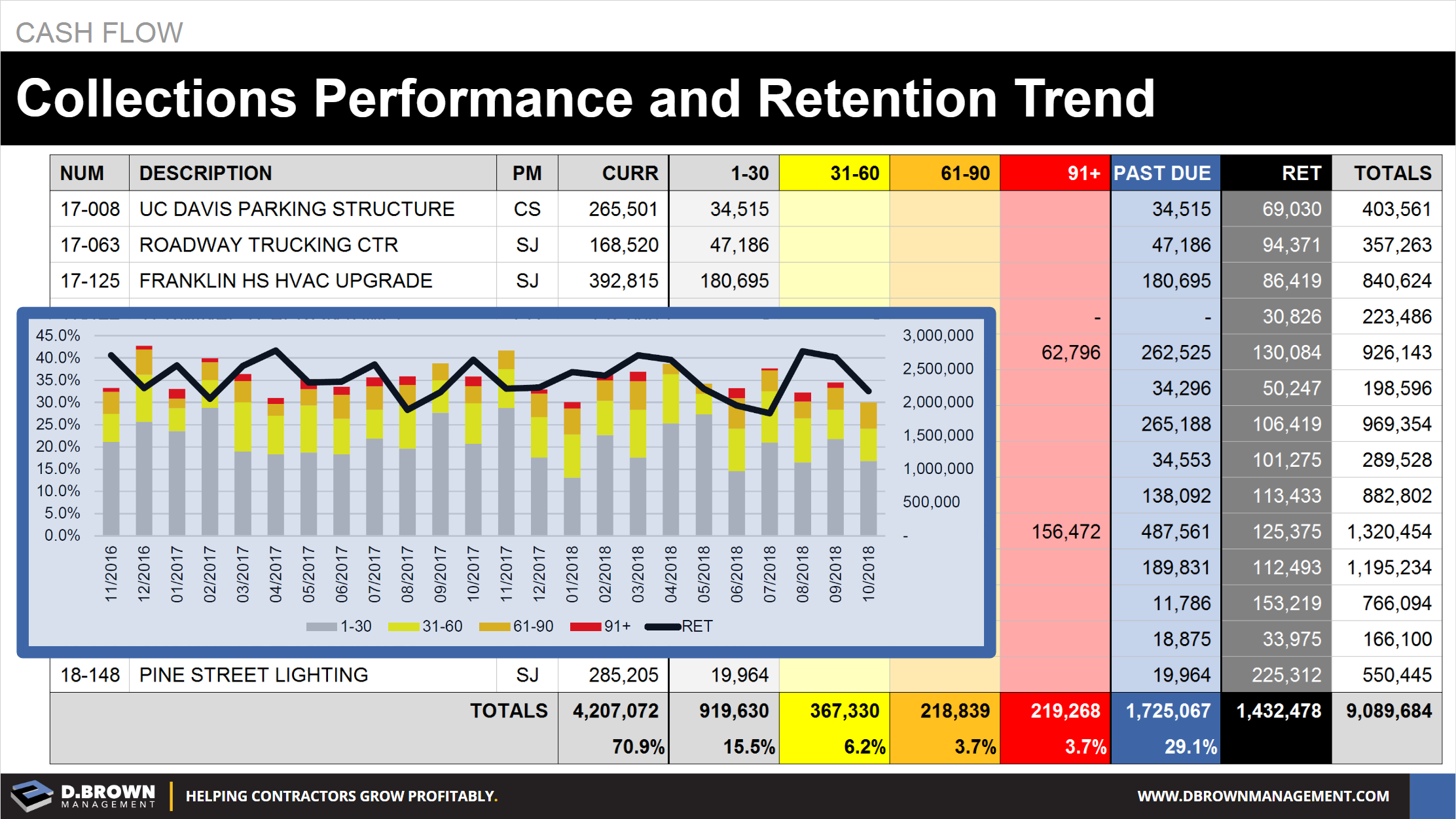
Cash Flow: Collections Performance and Retention Trend.

You should see very little in the 91-plus day part of the bar chart, maybe a minor red tip at the worst.  

You should see a trend of the total percentage of your receivables that are 1-30 days or more past due coming down. We have seen contractors get these below 10% with rigorous attention to the collection process

The other trend to look at on this same graph is your retention outstanding. It is very easy for a contractor to get into growth mode and only taking on longer-term projects to have all their cash held in retention.  

Retention outstanding can be dramatically reduced by:


Collections and Retention Trend Metric
Great cash flow is a key driver of valuation and successful successions. Running out of cash is is the #1 reason contractors fail. Improving cash flow improves your Return on Equity. Protect yourself and never let cash flow be the limitation to your profitable growth....

Collections and Retention Trend Metric
Great cash flow is a key driver of valuation and successful successions. Running out of cash is is the #1 reason contractors fail. Improving cash flow improves your Return on Equity. Protect yourself and never let cash flow be the limitation to your profitable growth....

A Broader Definition of a Change on a Construction Project
The first step for contractors improving their management of changes on a project is simply earlier identification. This starts with a better definition of what a change really is, and then setting standards within your company around that definition.
Feedback - Build up, Don't Beat Up
Talent development is often slowed down because people don’t know how to give productive feedback. The skills of giving, receiving and acting upon feedback can be developed.
Progressive Questions for Interviews, Evaluations, and Development
Asking progressively higher-level questions helps assess capabilities while allowing you to stop before making the other person feel inadequate. These questions are valuable for development—answering them is like exercise for the brain.