Multipliers for Success at All Levels

As a leader in the construction business, you can think about success in three broad areas.

D. Brown Management Profile Picture
Share
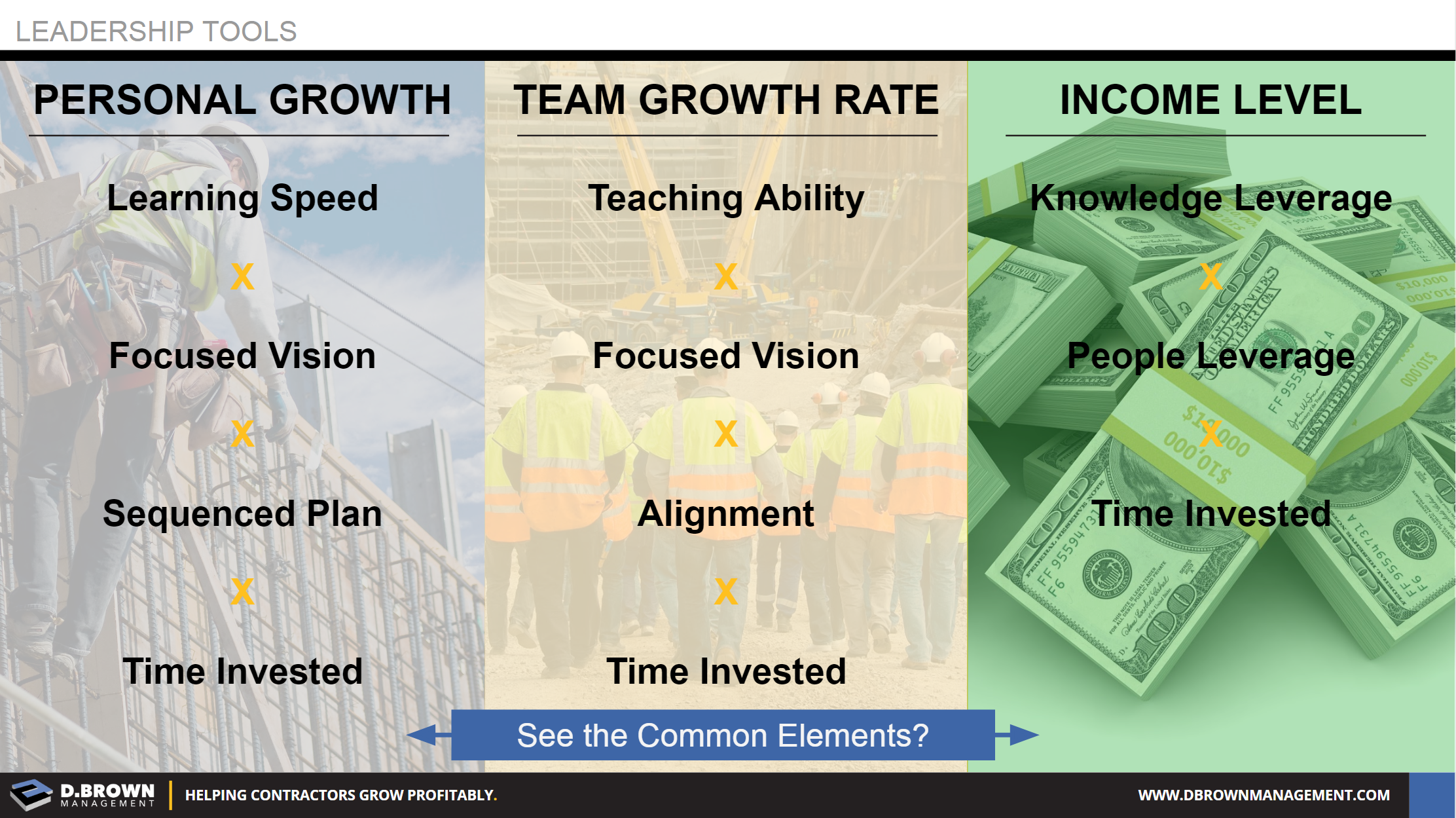
Leadership Tools: Success Formulas. Personal Growth, Team Growth Rate, and Income Level. Comparing common elements.
  1. Personal Growth: This will drive everything else. If you are not developing yourself with a specific plan, everything else is minimized. You must have a focused vision and a well-sequenced plan to get there, or you will waste a lot of time. See the book “Smarter Faster Better.

  2. Team Growth Rate: If you aren’t growing your team’s capabilities and capacity, you aren’t leading.  The biggest variables here include your teaching ability as it complements the team’s diverse learning abilities and how aligned the team is. See the books “What Got You Here Won’t Get You There,” and “The Five Dysfunctions of a Team.

  3. Income Level: This will follow and is a critical element of the Contractor’s Scoreboard. It is an outcome that is largely a multiplier of 1 & 2. See the book “The Great Game of Business."

Courtney Stearns frequently talks with clients about “Zero Multipliers” and as we all know, if any one of these is a zero, then the outcome is a zero. 

Which of these multipliers could you improve the most?  

Which would have the biggest impact on the outcomes you want?


Leading Growth through Building People
Southwest disrupted the airline industry by a relentless focus on building their people around a culture of fun, hard work, and hands-on leadership. Contractors with that same level of focus on their people and culture will dominate the industry tomorrow.
Calm and Deliberate Action
Slow is smooth and smooth is fast. This advice is invaluable when leading a team through a crisis. Calm and deliberate action is what's required, often from incomplete and conflicting information.
Management System Improvements (4 Interlinked Phases)
Many improvements fall short of expectations because steps are skipped in the earlier phases. Following these four phases will result in faster overall adoption of the changes, better outcomes, and most importantly, development of the team.