Positioning for the Best Talent

Great talent is crucial for any contractor.

D. Brown Management Profile Picture
Share

Contractors are in an all out war for talent.  The winners will be those contractors that master recruiting, retaining and development at both the craft and leadership levels.  This has been widely discussed across many industries since McKinsey started their research in 1997 later published in “The War for Talent”.  
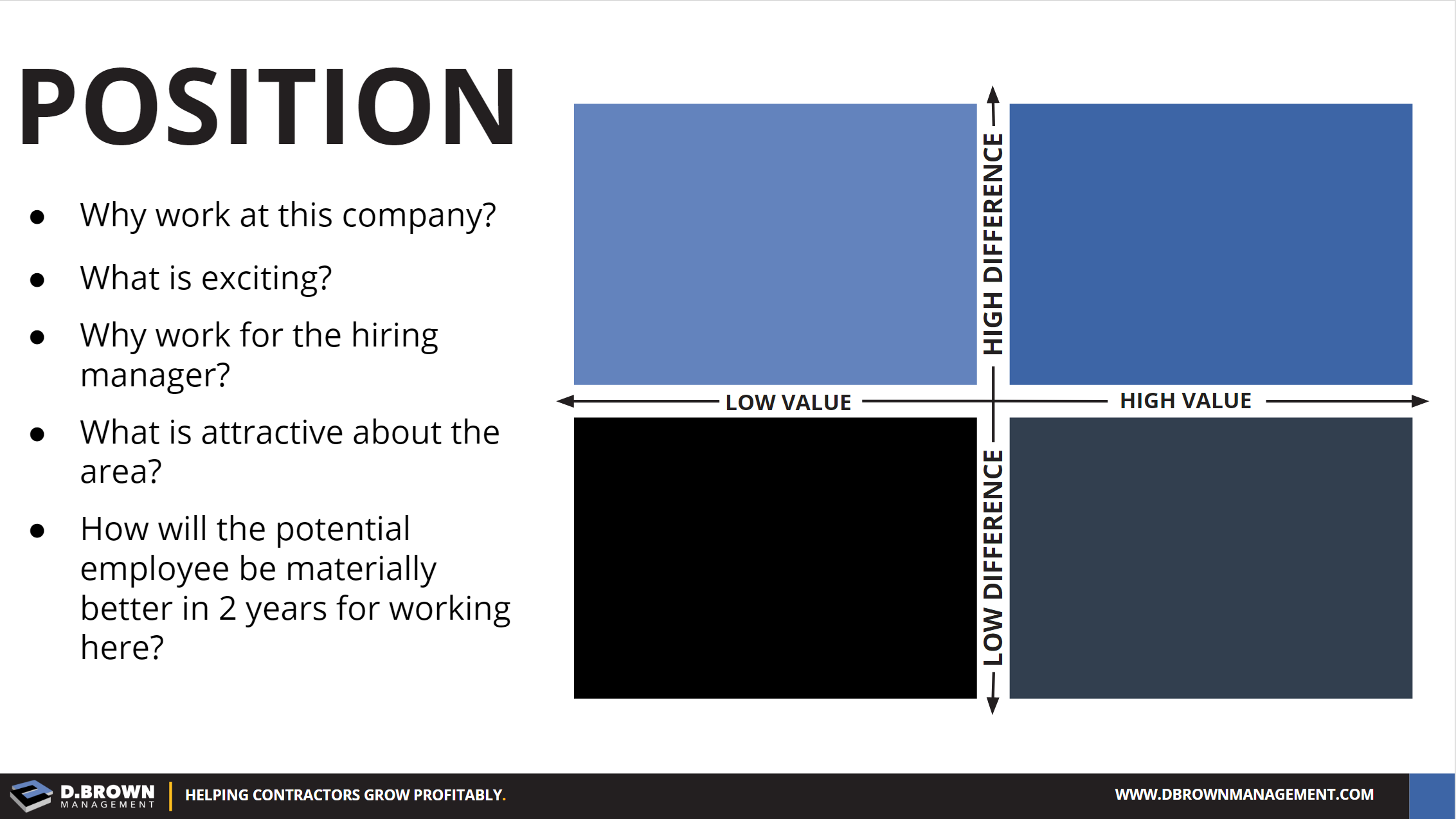
Talent Positioning: Questions to consider when adding new talent to the team.

The first thing a contractor must do is answer these 5 Critical Questions about talent.    

Just getting these answers is very hard.  Beyond that you must force-rank them into the various categories on the positioning matrix.  What you are looking for are the things specifically about your business that are:

  1. Highly valued by current and potential team members.
  2. True differentiators between you and the other contractors in the market.  

It is often hard to see these differentiators yourself because you live them every day.  This is where a great 3rd party facilitator can really help a company define their competitive position for talent. Tim Harris has done a great job with several of our client and is constantly challenging our team. 

Learn more


Organizational Strength (Quantifying Current State)
Quantifying organizational strength visually allows you to both see and measure current gaps and opportunities. This helps contractors better allocate resources for recruiting, training, and development aligned with their business plans.
Cascading Goal Setting and Management (Objectives and Key Results - OKRs)
Successful outcomes start with shared goals integrated across all parts of the business — including multi-company project teams. Management ensures those goals are regularly reviewed and adjusted to stay on track.
Weekly Percent Planned Complete (PPC) and Project Performance
Improving the project planning and delivery process starts with improving predictability around the schedule. Nearly every Superintendent and Foreman is familiar with the Short-Interval-Plan (SIP) and typically fill one out weekly looking ahead 1+ weeks.