
- Start by tightening the scope to something actionable. For example “Electricity” is very broad. “Electrical Contracting” is broad. “Electrical Preconstruction” is narrower. “Electrical Conceptual Estimating for Medical Office Buildings” is ACTIONABLE!
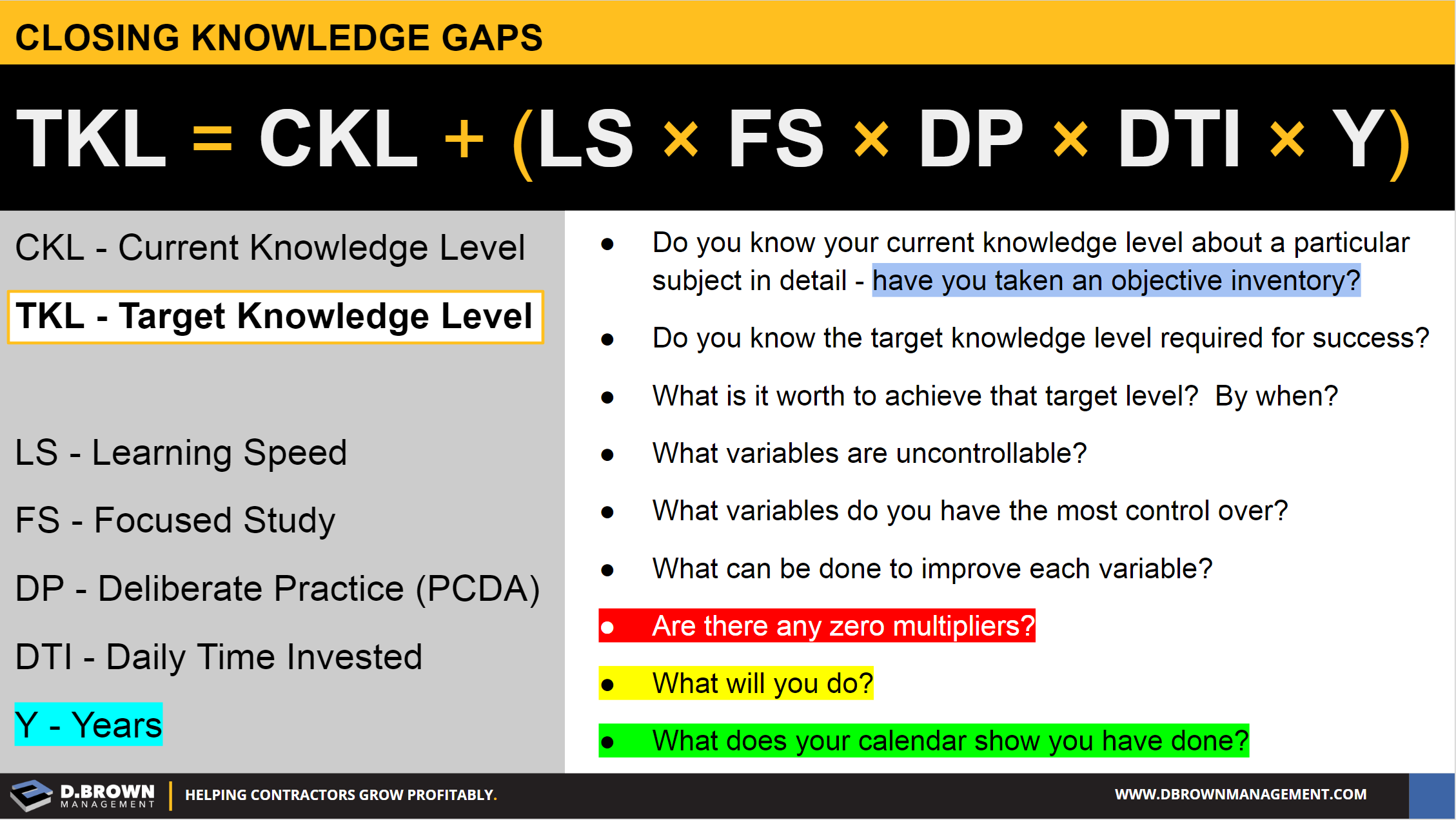
- Take a detailed inventory of your Current Knowledge Level. Involve others who are experts in the area because you probably can’t truly see what you don’t know.
- Assess where your Target Knowledge Level really needs to be. Will 80% of mastery level achieve the results you want or do you have to be the best in your market to achieve the results you want? Learning takes time and resources so it is a waste to “Over Learn” unless it is just for your personal enjoyment.
Now the Factors for Closing that Gap:
- Learning Speed: Know where yours is at. Everyone’s is different in different areas. Don’t worry about it. There are many other multipliers you have more control over. Look at how you can improve your learning speed through sleep, exercise, nutrition and timing.
- Focused Study: If you skip all over the place or look too broadly it will take longer. Develop a plan and stick to it.
- Deliberate Practice: Just like physical exercise the best way to learn is to do it over and over tightening up timing and form each cycle.
- Daily Time Invested: Practicing for a specific period every day when your brain is fresh and practice until it “hurts” providing time to recover afterwards just like you would physically exercise.
- Years: If it is worth learning and worth mastering the time is probably measured in years or large fractions of a year if you have really tightened up your scope.
Does this level of investment make sense? If not then re-evaluate the knowledge gap you want to close.
Look back at your calendar for the last month - what does it tell you about your learning behaviors?
Will those behaviors get you where you want to be in the next year? 2 years? 10 years?
