Business Operating Layer

Execution is critical for contractors because we work in a highly competitive business with relatively low margins compared to the risks taken.

D. Brown Management Profile Picture
Share

Execution is the discipline of getting things done. A simple way to look at your organizational structure is in three major layers:
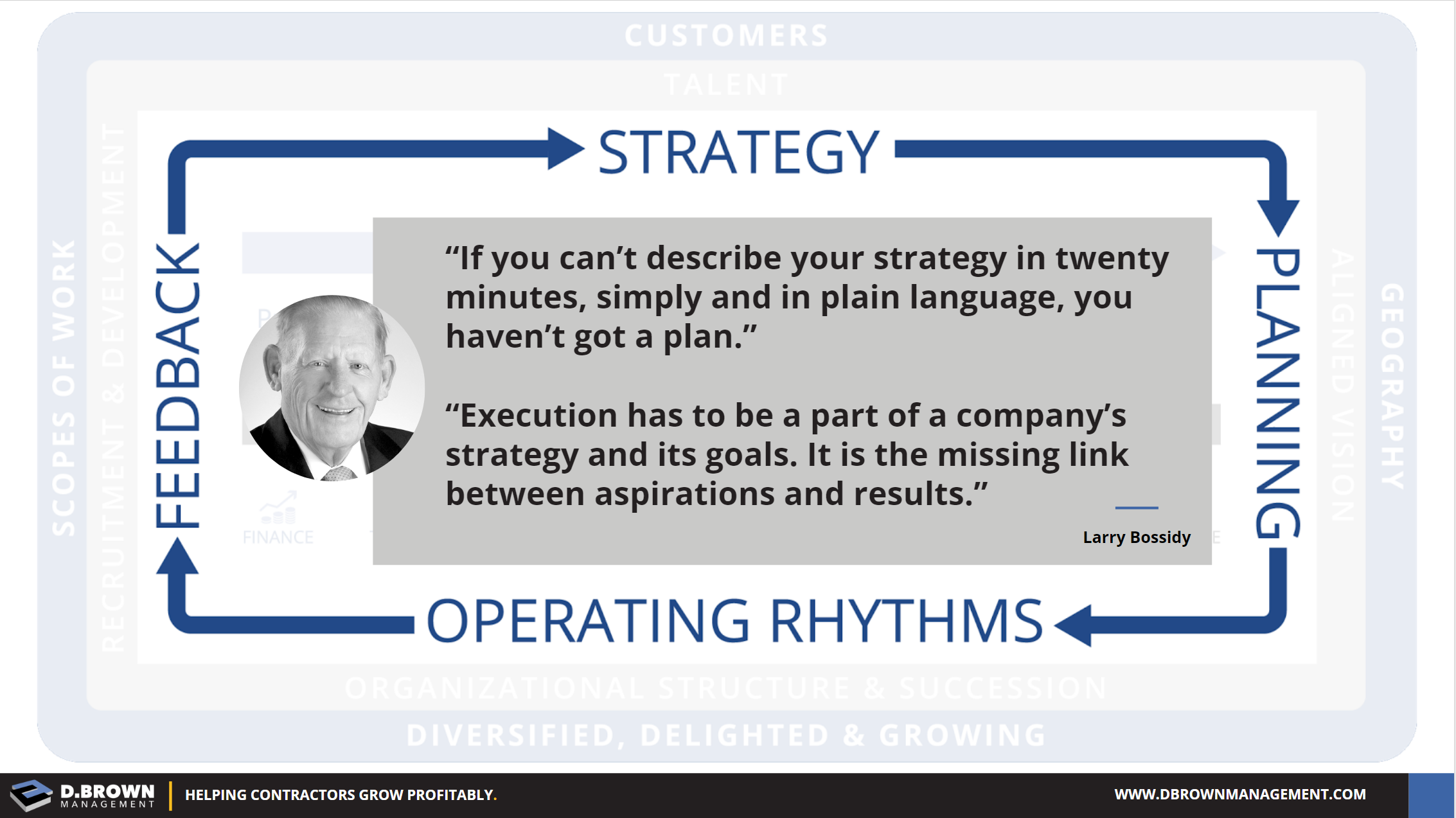
Contractor Business Model Business Operating Layer.
  1. Ownership & Senior Executive Leadership:  Defining what you want the business to look like over 10+ years and how the business will be setup for the next generation of leadership.  
  2. Business Operating Layer: This is the layer that ensures execution of the long-term strategy and delivers the financial returns required by the owners.
  3. Project Execution Layer:  This is where the rubber meets the road and value is added to your customers.  This layer makes up the majority of the talent, time and other resources in any contracting business.  This includes all project related people and support. This is the foundation and any weaknesses here will show up everywhere.  

How many of the problems you are having at the Project Execution Layer are due to weaknesses in the Business Operating Layer?   

Learn More


Lead Measures and Outcomes: Starting with the Schedule of Values (SOV)
It is nearly impossible for a contractor to have consistently great cash flow if they have a Schedule-of-Values (SOV) that isn’t loaded properly and integrated with the project schedule, including a projection of the cash flow.
Problem Finders vs. Problem Solvers
Patty McCord represents the shift that construction contractors must make in how they view HR’s role as it integrates with the company’s strategy and execution.
Cash Flow and the 5Cs of Credit - Collateral
The 4th of the 5Cs of Credit is how much and what type of collateral the contractor will put up as a guarantee. The collateral requirements change significantly as contractors grow.