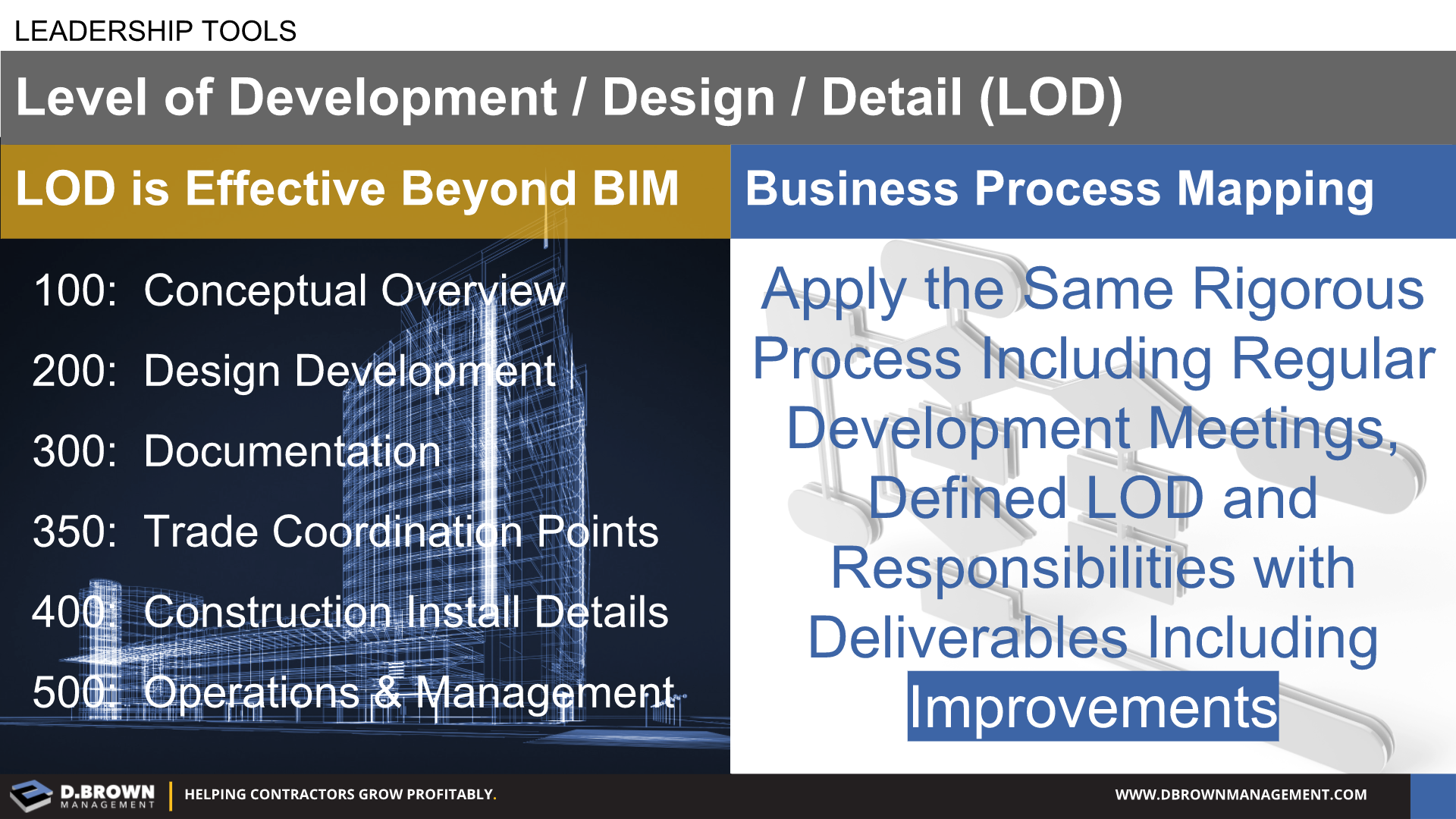
Levels of Design / Development / Detail - Beyond just Design

Contractors can improve business results by applying many of the same processes and vocabulary to their business that the industry is applying to projects.

D. Brown Management Profile Picture
Share
Leadership Tools: Levels of Development Design, and Detail (LOD).

Consider how the different Levels of Design / Development / Detail (LOD) could be applied to your planning processes.  Starting with a basic high-level value-stream map of how your company acquires and delivers projects to your customers.  Think about a simple diagram with 10-20 components; level 100.  

Now consider the series of meetings and teams you would setup on a project that will take that high-level diagram through increasingly granular design details.  Consider all the frustrations of working through that design-development process going from concept to details and specifications that are fabrication / construction ready.  Consider the process rigor including RFIs and change management including value-engineering.  

Imagine your business with a complete set of plans, specs, as-builts, inspections and O&M manuals with training upon turnover similar to what we have on every project.  That is Level 500 of the BIM standards.   


What if you applied that much rigor to your business management processes?   

Schedule a call to learn how


Calm and Deliberate Action
Slow is smooth and smooth is fast. This advice is invaluable when leading a team through a crisis. Calm and deliberate action is what's required, often from incomplete and conflicting information.
Grow Sustainably with Great Talent
The contractors who want to attract and retain the best talent must provide opportunities for their career growth and that comes from having a strategic growth plan. This means a tough and scary leap of faith considering the labor shortages being faced.
Lean Principle - 8 Categories of Waste
The first step in improving labor productivity in construction is improving everyone’s ability to see the waste. Waste can then be broken down into 8 major categories. Like colors these are often interrelated.